The Groaning Stone
“In a lane near Debenham, Suffolk, a large boulder goes by the name of the Groaning Stone, for “when it hears Debenham’s church clock strike the magic hour of midnight it turns over and groans.”
The Groaning Stone in Debenham is one of the many magical stones of Suffolk and its story is fascinating. The above quote from: The Ancient Mark-Stones of East Anglia: Their Origin and Folklore, W A Dutt, written in 1926, shows that that the legend was still very much alive just a century ago. So, why was The Groaning Stone believed to turn over and groan at the stroke midnight?
Hello and Welcome to my first post. Thanks for joining me.
Field Research
I first heard the story of Groaning Stone in the early 2010’s and went to search for it with my husband, Mark. We had little to go on, just a story of a large stone laying on the river bed, but found it near a bridge on the bottom of the river bed and feeling pleased with myself took a photo to mark my visit. Later, when I checked the photo against the evidence I was collecting, I realised I hadn’t captured the Groaning Stone at all – just some random rock!
In my research of the Groaning Stone, I’ve noticed that quite a few other people have found the stone difficult to find, some mistaking the stone for another, like myself with some not finding it at all. Does the stone choose to reveal itself? Strange is the nature of these things that become folklore. For if everything were easy and ordinary where would the magic be? And how would folk tales and legends begin?
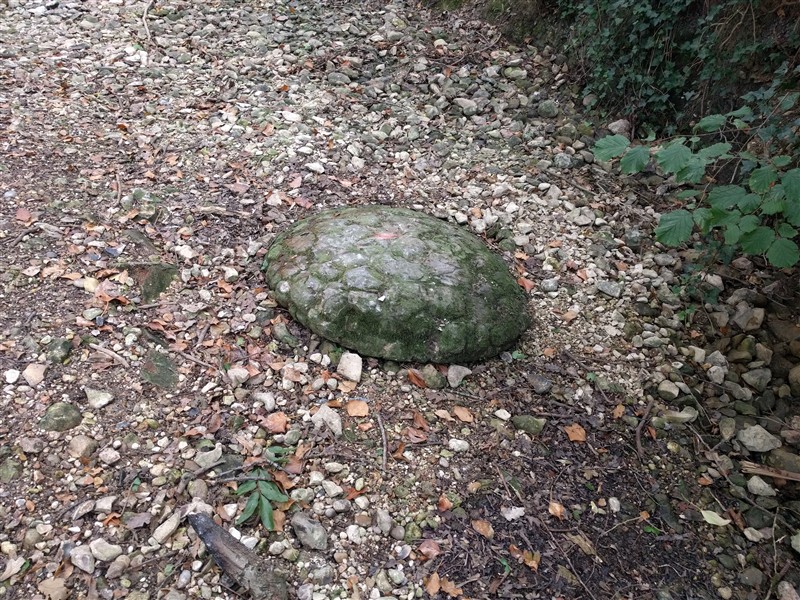
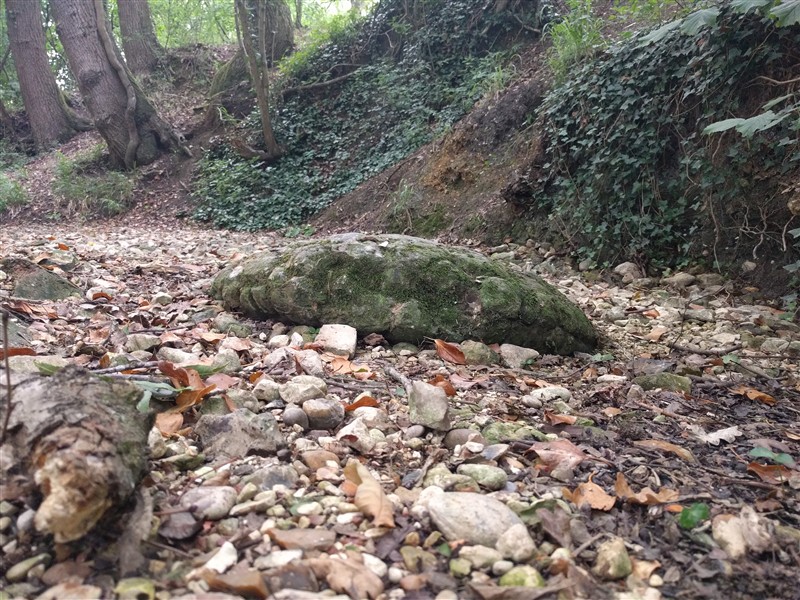
I went back a few years later in 2017 while Geocaching (an outdoor treasure-hunting game where you try to find hidden containers, called geocaches) with my husband and our son, Luke and this time was different. We knew at once this was the stone we had been searching for. Its strange, mysterious appearance is so unusual that when you spot it you can clearly see you are not mistaken. The Groaning Stone makes its appearance almost like a sleeping turtle waiting on the river bed for the water to return, just as it has done for thousands of years. Does it wait to swim once again – or to groan as it slowly turns over onto its other side… ?
Maps
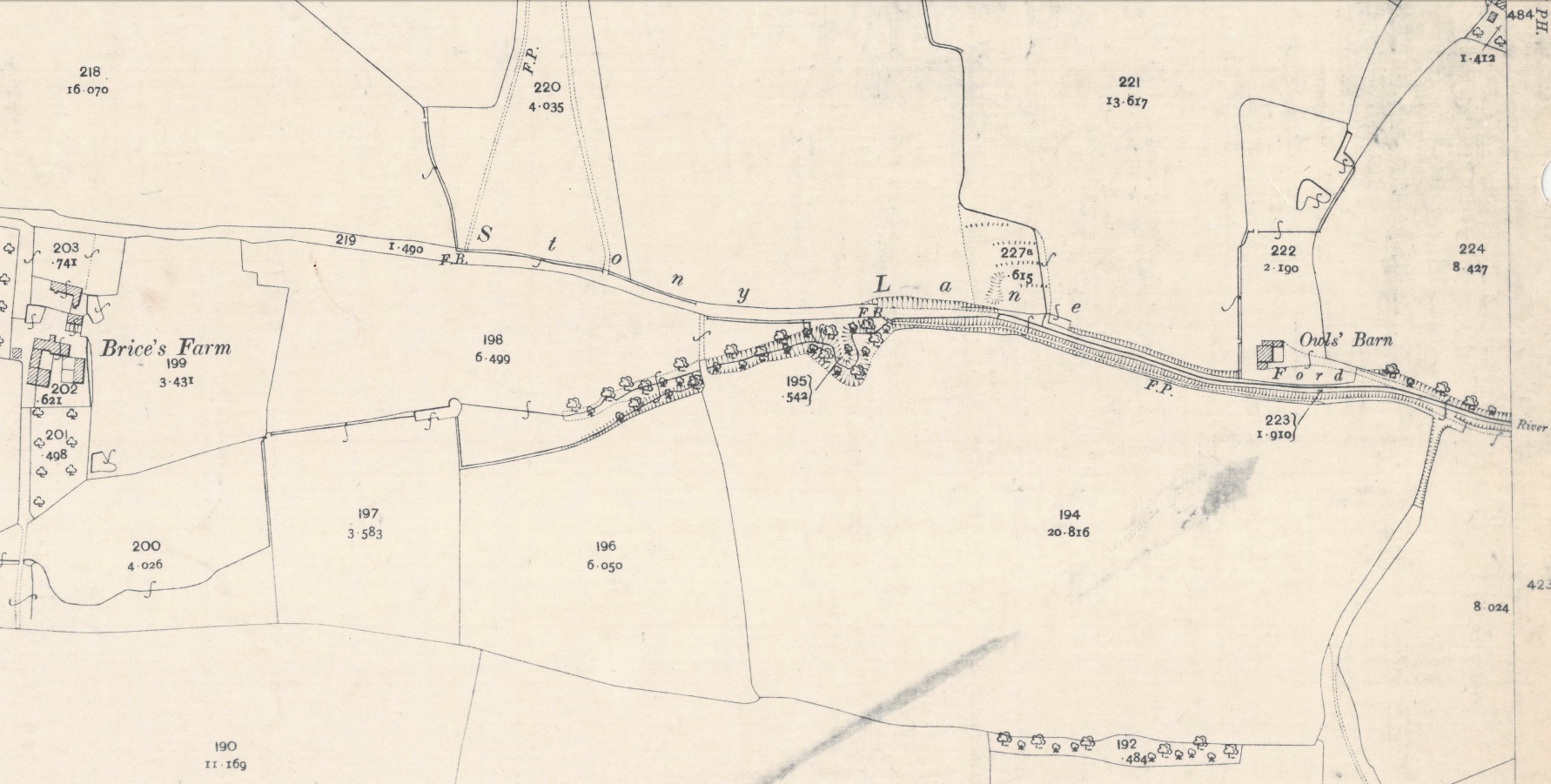
In this map the Groaning Stone sits just about where the triangular shape in the trees appears on Stony Lane and likely where the numbers 195.542 are marked.
Research
There is an excellent account of the history of Debenham available on the One Suffolk website (details below). It says:
‘…In the Iron Age the people’s intellectual leaders, called Magi, were attracted to the Debenham area because it contained the springs giving rise to the River Deben. The local Celtic tribe, called the Trinovantes, elected their chief at a ceremony at the Groaning Stone, located where the main stream of the River Deben rises about a mile to the west of Debenham.‘
So it appears that some part of the legend of The Groaning Stone may have begun in the Iron Age (800 BCE to 43CE) as a ceremonial altar for Druids and later the Magi. The stone would have been sited in the same place for thousands of years, and because of its very unusual appearance, and its vicinity to the springs giving rise to the river Deben, would clearly have been recognised as a sacred stone.
We also need to take into account that in pre-Christian times the accepted world view was animist. This meant that people believed that spirits or souls inhabited all natural entities, including animals, plants, and inanimate objects. To their way of thinking stones were ‘alive’ or had consciousness.
Stones in Folklore
In folklore, stones represent stability, strength, indestructability, reliability, immortality and the eternal, supreme reality. Also, stones have life giving properties and people can be turned into stones. Stones which stand alone mark sacred places or events.
Stones which are flat rather than upright or cone shaped, are linked with the feminine and the moon. Spherical stones in particular are associated with coldness, fertility and with winter giving birth to spring.
Stones are often depicted as enchanted figures, protective talismans and also as portals.
Druids and Stones
It is well known that Druids held a profound regard for trees, but stones were also sacred, living, spiritual, and interconnected entities rather than mere natural resources. In groves, the Druid’s sacred places, stones and trees represented the cosmos. The trees signified all that changes and expands and the stone all that which is durable and enclosing. Small stones would most likely have been placed around the grove, but larger stones may have been used as altars – to give offerings and in the case of Druid’s even sacrifice.
If the stone had been used as an altar, it seems very likely that the tribes which followed would have contiinued to regard the area as sacred and this seems to fit with the idea of chieftans being initiated at the stone.
Water and Stones
Large stones, located near water (seas, rivers, lakes) feature heavily in European and Celtic folklore, and symbolise boundary points, protective places, or portals to the supernatural world.
Turning and Groaning
Stories of large heavy rocks turning by themselves is widespread throughout the UK and beyond.
In folklore, the movement of stones, carries deep symbolic weight, often representing the boundary between the living and the spirit world. The act of a rock moving by itself signifies a supernatural transformation from stability and strength to uncertainty and mutability – in other words, the boundary between the living and the spirit worlds.
The Significance of Midnight
Folklore stories set at midnight hold significant cultural, psychological, and symbolic weight, primarily representing a liminal threshold, the boundaries between days, light and darkness, and the living and the dead. Known as the ‘witching hour’, this time is traditionally believed to be when supernatural forces are most potent.
What is this Strange Rock?
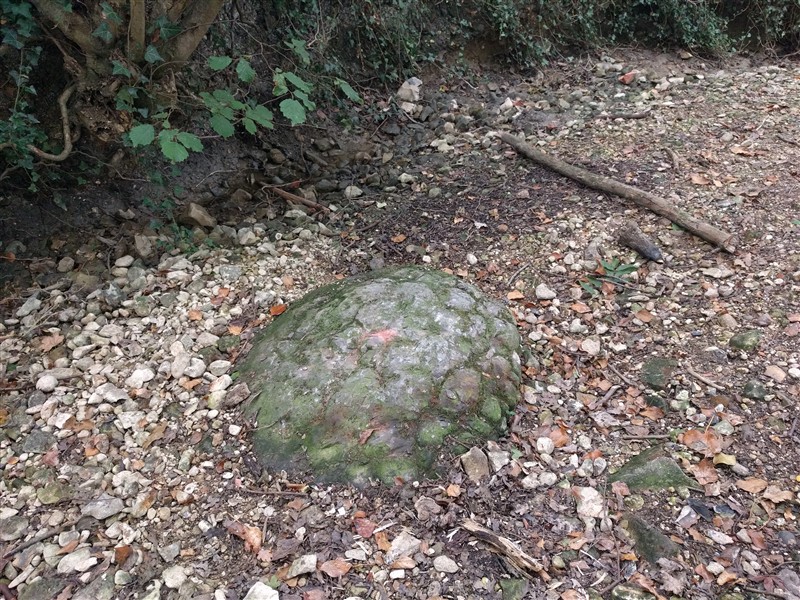
So, what’s the scientific explanation for this strange looking stone or rock? This type of stone is known as a glacial erratic which means that it is not native to the area. Geologists say that the rock was brought from higher ground by glacial ice around 450,000 years ago. But its nobbly, turtle like appearance is very different to other local glacial erratics.
It’s appearance is what makes this stone so unusual. It is a septarian concretion or a septarian nodule which explains its turtle like appearance, almost as though lots of stones were fused together. It was formed during the Jurassic and Cretaceous periods, between 110-165 million years ago. Scientists think that a strange transformation of porous rock, water, minerals, mud, clay occurred on the sea bed which was then compressed, dehydrated and shaken by earthquakes to give this strange appearance. But they’re not really sure. One scientist concludes that this theory:
Although plausible because it seems to explain key observations of concretions and their strati-graphic habit, this interpretation (like many explanations of historical events) is necessarily speculative, for septarian concretions have never been observed forming today, their chemistry and rheology can only be inferred, and reproducing septarian cracks in the laboratory has not yet been achieved.
So even science can’t explain with certainty how this rock came to be. New discoveries are being made regularly about magnetism in rocks, rocks that make sounds and rocks that hum. Some rocks have been recorded producing an ultrasonic pulse at certain times of the day. In the Death Valley National Park, California and in Little Bonnie Claire Playa, Nevada, rocks are seen moving by themselves. In Romania, rocks called Trovants are bulbous, otherworldly stones that grow over time.
Local Folklore Involving Large Stones
There are a number of local folk tales using large stones as the subject of supernatural occurrences. The Witch Stone at Westleton is reputed to seal in a witch who can be summoned by performing a ritual. There is a stone at Blaxhall which is said to grow. The Cedd Stone at Chediston is said to be linked with various magical incidents throughout history and was once used as a sacrificial altar. The Devil’s Stone at Bungay is said to seal the devil underneath.
Conclusion
So, what do we know?
- Large stones are rarely found in Suffolk and are usually glacial erratics moved by ice thousands of years ago. The Groaning Stone is a glacial erratic but is not made from the usual sandstone.
- The Groaning Stone is a septarian concretion (appearing like a turtle).
- The stone is sited near springs which give rise to the river Deben, so would have been seen as sacred and regarded as a boundary, a place of protection and also a portal between worlds.
- The site although now quiet and remote, is historically significant as an important settlement.
Archaeological evidence points to Debenham as being far more important than the sleepy idyllic village that it is now. The place where one of the springs gave rise to the river Deben, would have been a favourable place for early settlers and the unusual stone sited near to the spring would have been seen as sacred to the early Pagans.
Stories of rocks and large stones retaining the energy of past events is widespread. Is the groaning and turning one aspect of this type of energy?
Many aspects of what I have found point to the Groaning Stone as being seen as a portal. The Druids worshipping here regarded their sacred places as portals to another realm, that the rock is said to move symbolises that it changes from solid to fluid, the known to the unknown and that this is said to happen at midnight (the time when the two worlds merge) all suggest that this symbolises a portal.
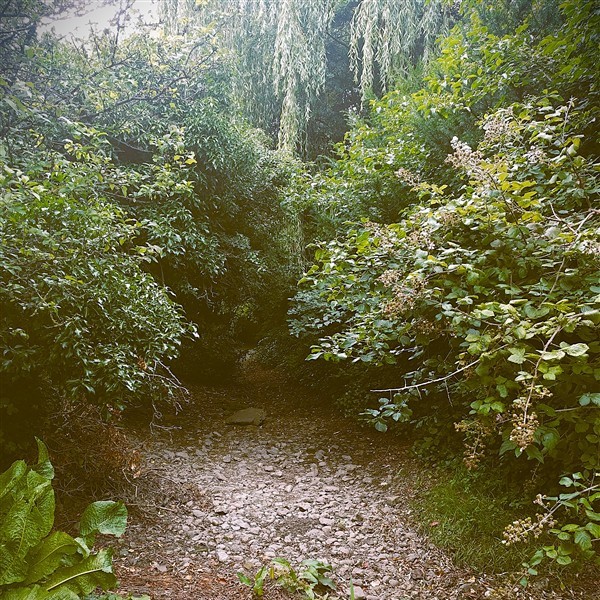
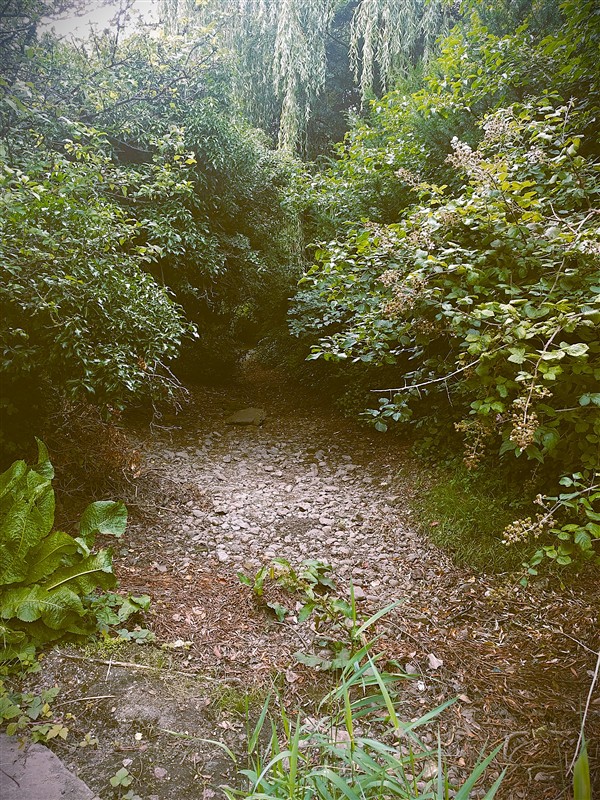
Looking at my picture above, does this look like a calm, quiet and sacred place? Or a dramatic setting for tales of transformation, horror, and magic? How about at midnight?
What do you think? Have you had an experience at the Groaning Stone? Do you know of another stone in Suffolk with a similar story?
References
- http://debenham.onesuffolk.net/useful-information/local-history/debenham-the-early-history/
- Dutt, W.A., The Ancient Mark-Stones of East Anglia: Their Origin and Folklore, 1926
- https://www.researchgate.net/publication/229868677_Septarian_concretions_Internal_cracking_caused_by_synsedimentary_earthquakes
- Roud, S., The Penguin Guide to the Superstitions of Britain and Ireland, 2003
- Cooper, J. C., An Illustrated Encyclopeaedia of Traditional Symbols, 2013

You May Also Like