Home
Hello and welcome to Suffolklore!
Suffolk is rich with folklore, enchanting landscapes, tales of magic, the supernatural and the extra-terrestial and we’ve made this site to share, not just these stories, but also the ‘old ways’ of the people of the county.
But before we look into the folklore, traditions, culture and stories which shape the past of Suffolk, it’s important to consider the geography and history of our beautiful and magical county.
Geography
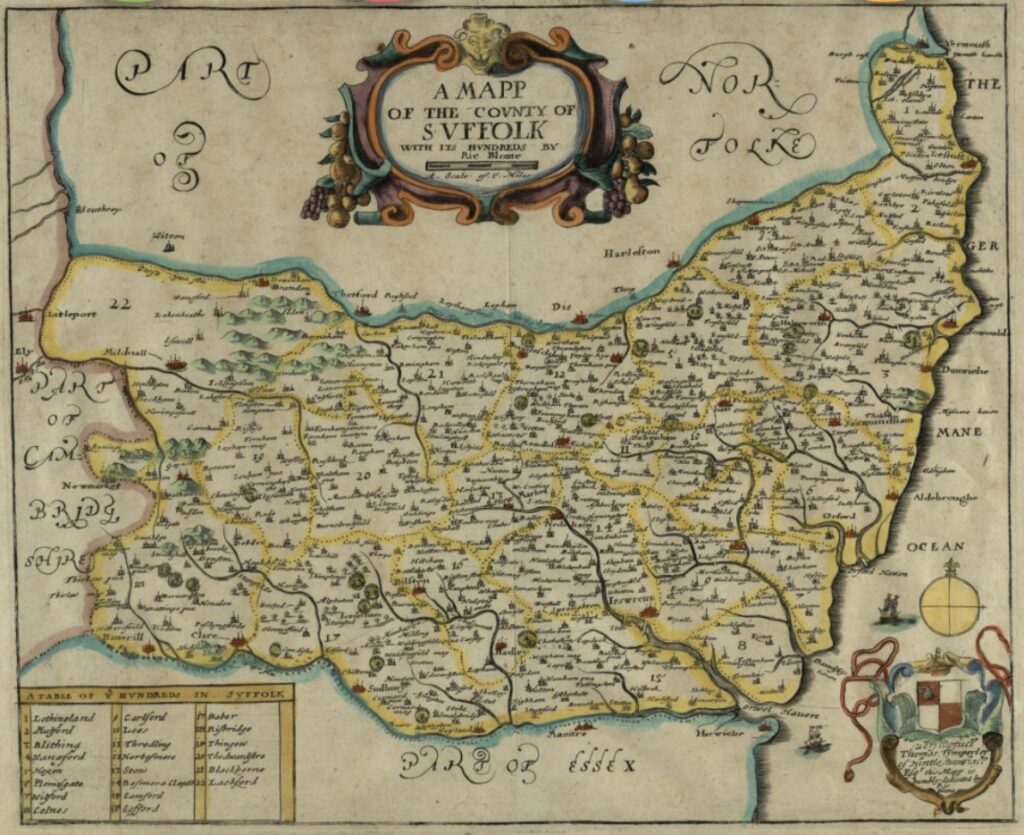
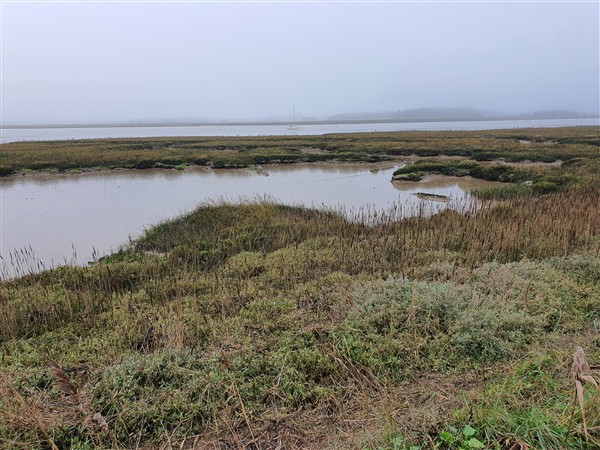
Suffolk is in East Anglia in the east of England. Indeed, it holds the most easterly point in the British Isles. It is mostly flat – there are no mountains here and very few hills, although there are a few pretty valleys. The level ground is excellent for arable farming, and Suffolk is one of Britain’s best producers of food. There are 50 miles of coastline, areas of outstanding national beauty (AONB) and many waterways. Suffolk possesses some of the most beautiful towns and villages in Great Britain with a wealth of ancient buildings and various sites of significant historical importance.
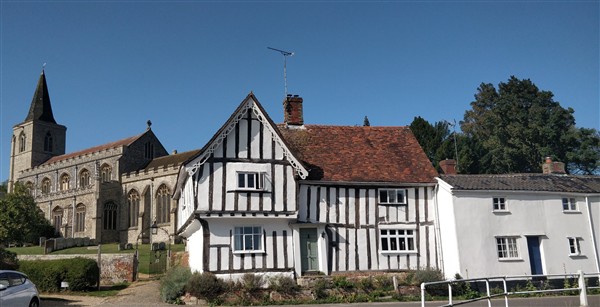
Although now just 2 hours from the capital, it is considered a contrast and an escape from the hustle and bustle of the big city. It was formerly known as ‘sleepy Suffolk’ and in the 18th century, its people were regarded as culturally backward and uncouth by the higher echelons of society. This belief could have been gained from the dialect of Suffolk, which is slow and deliberate and could give an impression of the people of Suffolk sounding ‘country bumpkin’. The dialect actually has origins in Old English, Anglo-Saxon, Norse and Dutch. It is a warm, gentle speak, rich in history and local character and has been chosen in recent movies and television productions precisely because of that.
History
Suffolk is rich in history. Artefacts found in Suffolk suggest that humans were living here up to 700,000 years ago, which is some of the oldest activity found in Northern Europe. In the Neolithic Period (10,000-2,000 BCE) and into the Bronze Age (3,200-900 BCE), there is evidence of hillforts, burial mounds and causeway enclosures.
Before the Romans came to Britain, Suffolk was inhabited by two Celtic tribes. The Iceni tribe occupied the north and stretched up into the whole of Norfolk and part of Cambridgeshire and the Trinobantes, considered the most powerful tribe in Britain, to the south which covered south Suffolk, most of Essex and part of Hertfordshire. The tribes joined forces and with the Iceni Queen, Boudicca leading them, rebelled against the Romans in 50/61AD.
The tribes failed in their revolt and the Romans marked their occupation of Suffolk up to the end of the 4th century AD by building roads, towns, small settlements and villas, silver hoards from the period have also been found.
The term East Anglia comes from the Kingdom of the Eastern Angles, the Germanic tribe from northern Europe who settled here in the Anglo-Saxon period before the Norman Conquest. The kingdom was divided into two groups, the North Folk which is now Norfolk and the South Folk, now Suffolk.
The Middle Ages saw Suffolk invaded by Danish Vikings and ruled by King Guthrum, the Danish warlord. It became part of the Kingdom of Guthrum, which was part of Danelaw where Danish laws were applied after the treaties between Guthrum and Alfred the Great. The Danelaw spread from East Anglia, through central England and right up and into Yorkshire.
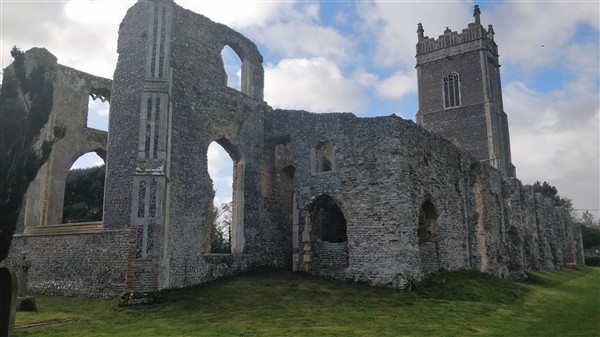
The Norman conquest in 1066 brought more change to Suffolk. Norman feudalism meant that Suffolk was now ruled by the Normans and the French. By 1086, much of the county was owned by the church. As well as churches and abbeys, approximately 20 castles were built by French-Norman lords as centres of power and administration.
During the Medieval period, the county became prosperous due to the cloth and wool trade, seeing its peak in the 15th and 16th centuries. Later Suffolk benefitted from agriculture, fishing and the maritime trade.
In the medieval period, Suffolk was divided into four for the Quarter Sessions, for administrative and legal purposes, then in 1888, these were merged into two separate administrative counties, West Suffolk and East Suffolk. It wasn’t until 1974 that Suffolk became unified as the county of Suffolk.
So, there’s the basics of the geography and history of Suffolk, now we can look deeper into the places, people, events and even the creatures which make this county so full of wonder and magic.